Getting married in Mallorca as an international couple
Your options, the documents you will need and how timing works
Getting married in Mallorca, also written Majorca in English, is simpler than most couples expect, as long as the paperwork starts early.
Foreign couples can marry legally in Spain through a civil ceremony or a religious one. They can also celebrate with a symbolic ceremony and complete the legal formalities at home.
This guide explains each option, the documents authorities usually ask for and how timing works.
Requirements depend on your nationality and where you live, so treat it as a starting point and speak to us before you commit to a date.
Yes, but the route depends on where you live. A civil wedding requires at least one of you to be resident in Spain, with your address registered at a Spanish town hall. If neither of you lives in Spain, a Catholic wedding or a symbolic ceremony are the usual routes. Each one changes how much paperwork you will handle before the wedding.
Three ways to marry in Mallorca
Each route suits a different kind of celebration and involves a different level of paperwork. Below we explain how a civil, religious and symbolic ceremony work in Mallorca, so you can choose the one that best fits your plans.
1. Civil ceremony
A civil wedding is legally binding in Spain and generally recognized abroad. At least one of you must be resident in Spain, as the file is opened at the registry office or notary where that partner lives.
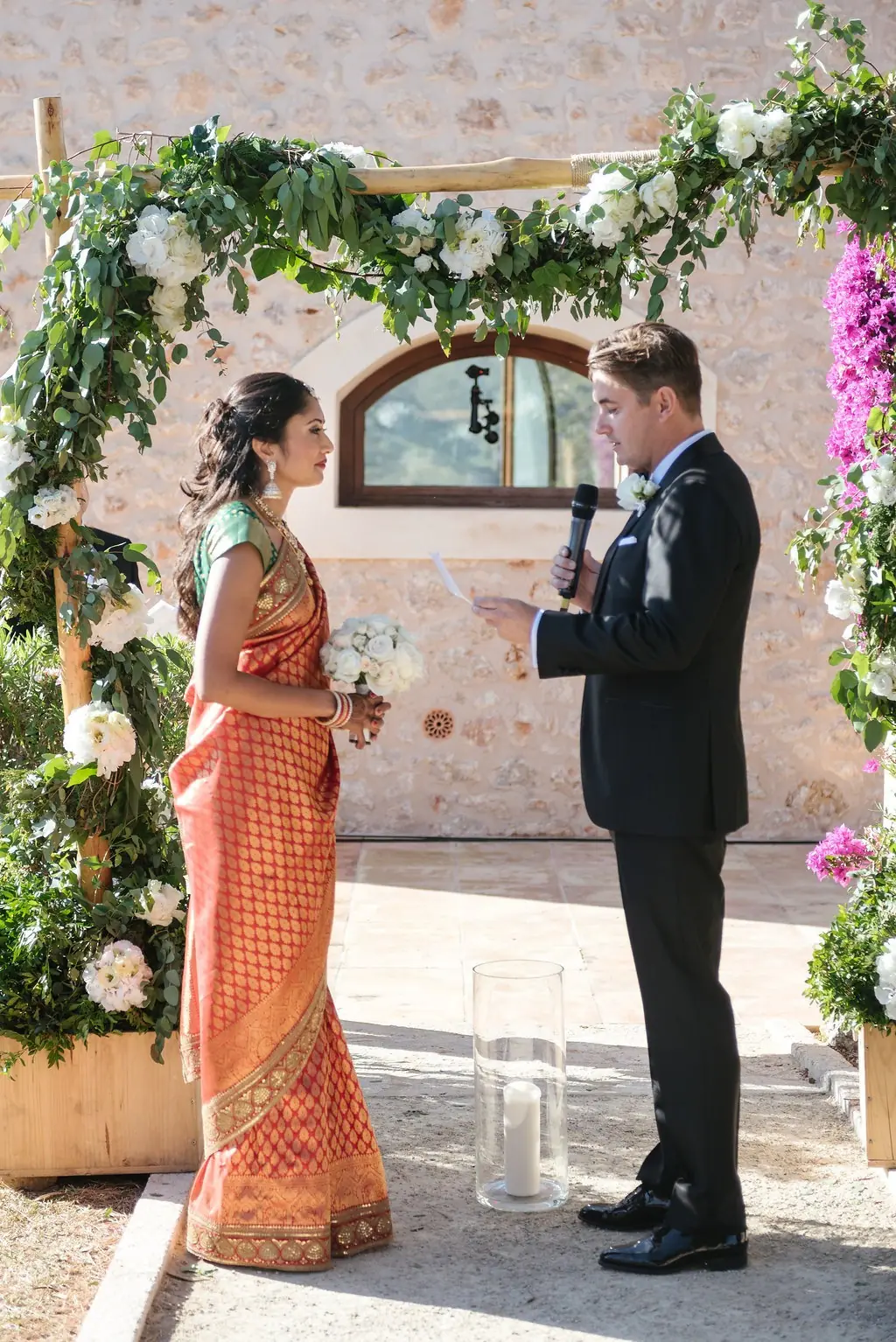
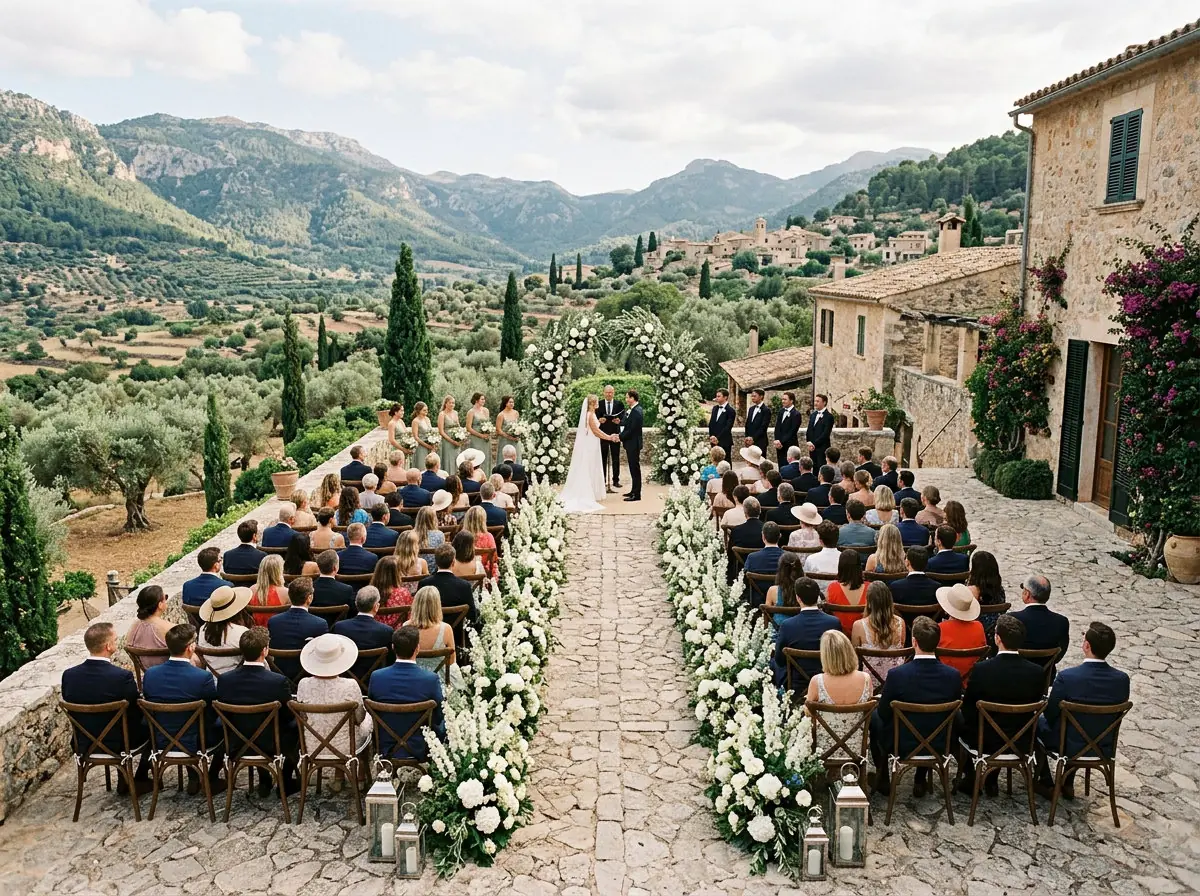
It is led by a mayor, a councillor or a notary and can often take place at the venue itself, such as a finca near Deià.
2. Religious ceremony
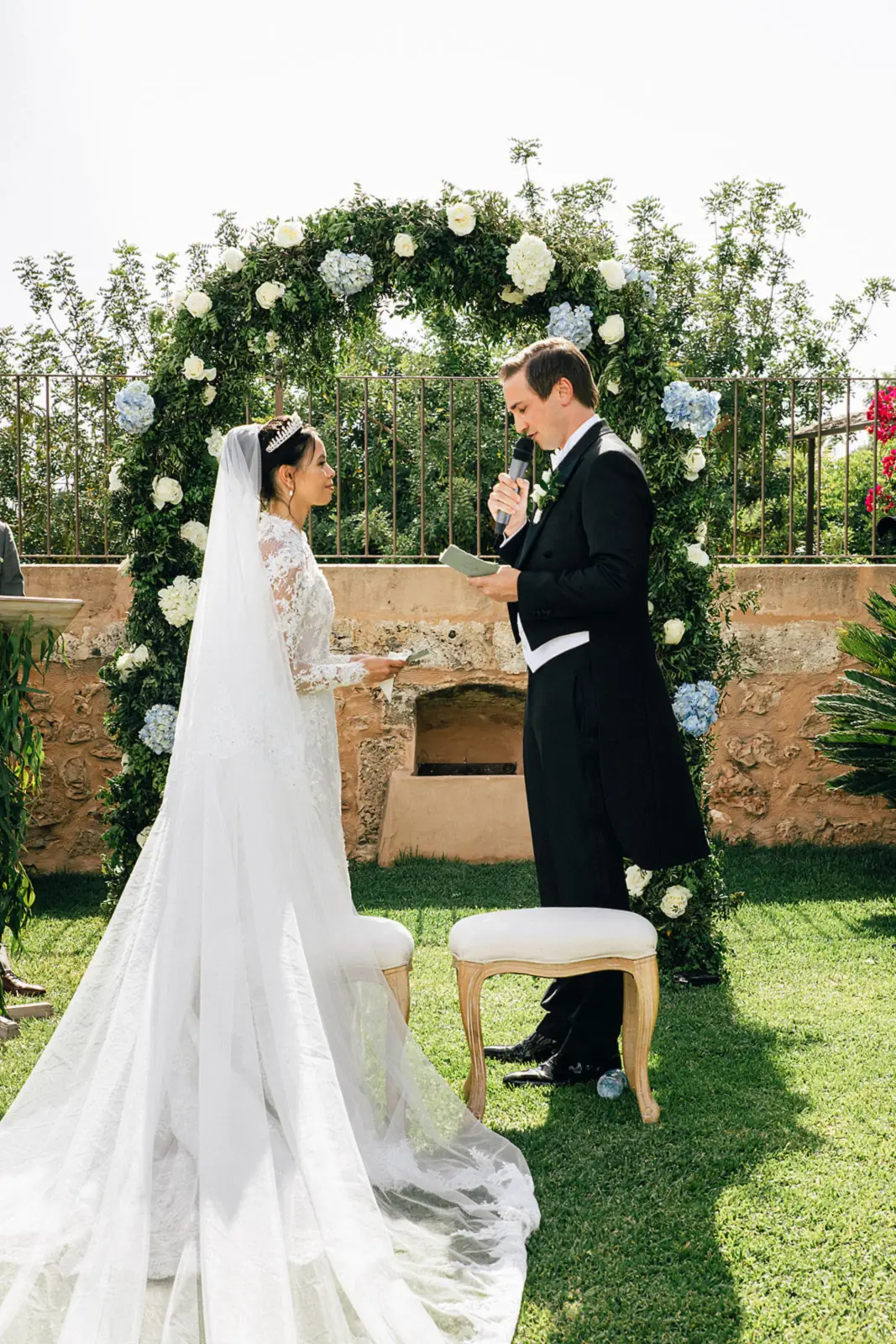
A Catholic ceremony in a Mallorcan church or chapel usually needs additional paperwork from your parish and diocese, which we help you gather in good time.
It must also be registered civilly to have legal effect. We help you coordinate the timing, so the blessing, the registration and the celebration fit into the same weekend.
3. Symbolic ceremony
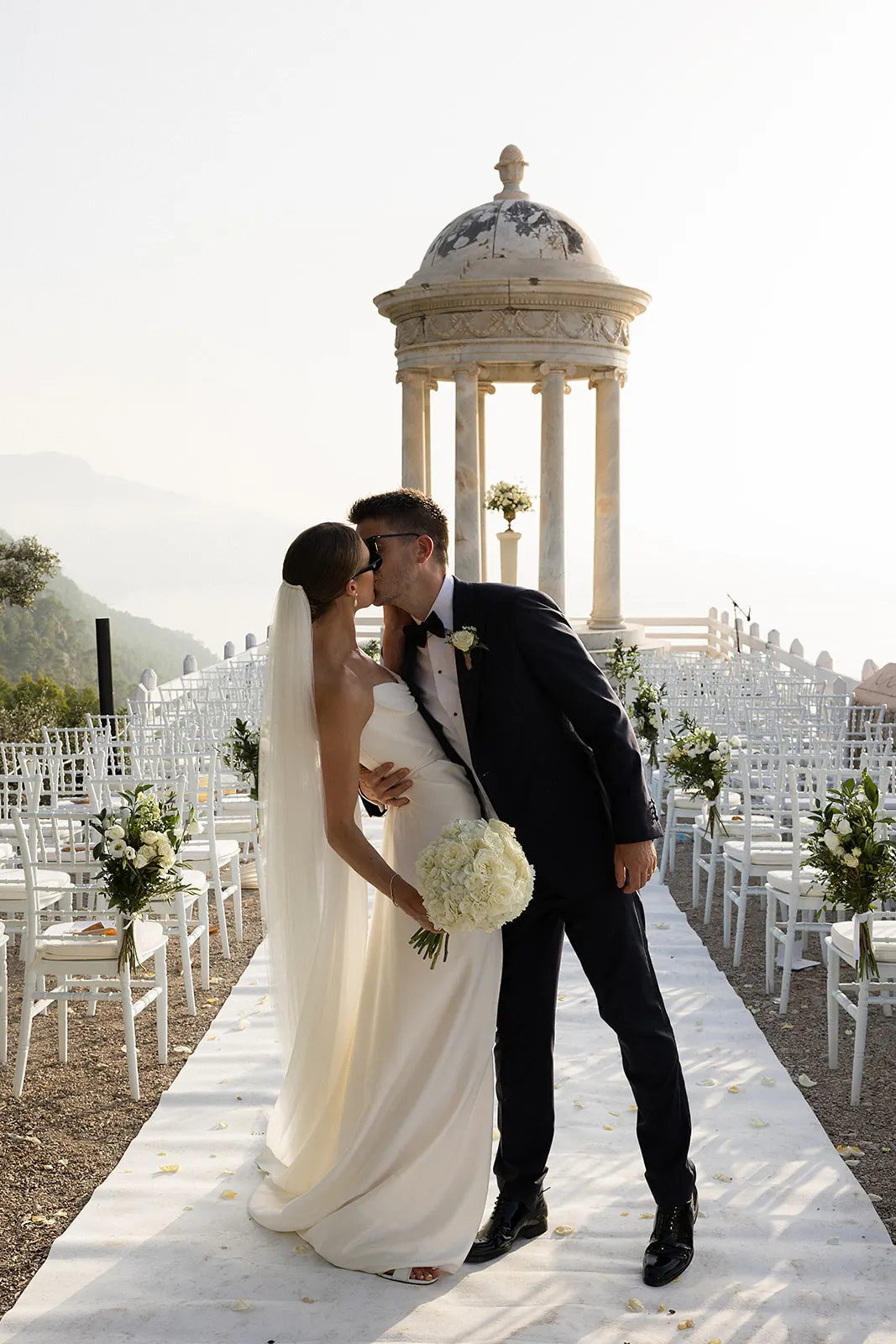
A symbolic ceremony has no legal validity, but it gives you complete freedom over the setting, the words and the person who leads it.
Many couples sign the legal documents at home, in a small registry office ceremony, and hold the symbolic ceremony in Mallorca with all their guests, which removes the Spanish paperwork altogether.
Documents you will usually need for a civil wedding
The exact list depends on your nationality and where you live. These are the documents authorities most often request:
Valid passports for both partners
Recent birth certificates
Proof of marital status, such as a certificate or sworn statement confirming that you are free to marry
A divorce decree or a death certificate if either of you was married before
Apostille and sworn translation into Spanish for documents issued abroad
Civil ceremonies normally require witnesses, and an interpreter if you do not speak Spanish. Couples from some EU countries, including Germany and Ireland, may benefit from simplified rules for certain documents. We check what applies in your case.
Getting married in Mallorca from the US, the UK, Ireland or Germany
Every authority reads the list slightly differently, but some patterns repeat by country.
American couples
The United States has no single national certificate of single status, so couples usually combine birth certificates with a sworn statement of marital status.
Documents issued by a US state are typically apostilled by that state’s Secretary of State before they are translated.
British couples
UK documents are apostilled by the Foreign, Commonwealth and Development Office and then translated by a sworn translator.
The proof of marital status requested can vary between registry offices, so we confirm the current rules before you order anything.
Irish couples
Irish documents are apostilled by the Department of Foreign Affairs.
As Ireland is an EU member state, some documents may qualify for simplified recognition, which can save time.
German couples
German couples are often asked for a certificate from their local registry office confirming that they are free to marry.
As an EU member state, Germany may benefit from simplified rules for some public documents.
How long does the paperwork take?
Allow several months. Opening the file, gathering and legalizing documents, translating them and scheduling the appointment takes longer than most couples expect, especially in summer, when registry offices and notaries are busy.
We recommend starting at least six months before your wedding date, and earlier for May, June, September and October.
Depending on the authority, you may need to attend an appointment in Spain to sign the file. We schedule it around your travel, so that it fits into your venue visit or your arrival days.
6+ months before
Start the paperwork and open the file with the registry office or a notary.
Documents
Gather your documents and have them apostilled.
Translation
Sworn translation into Spanish of documents issued abroad.
Signing
An appointment in Spain to sign the file, if your authority requires it, planned around your visit.
The wedding
Your civil, religious or symbolic ceremony in Mallorca.
After
Request your marriage certificate for name changes and records at home.
What happens after the wedding?
After the ceremony, we explain how to request your marriage certificate, which you will need back home for name changes and official records.
This guide is general information and not legal advice.
Last reviewed: November 2026
Questions couples ask
What are the legal requirements to get married in Spain?
+
There are three ways to marry in Mallorca: a civil ceremony, a religious ceremony or a symbolic celebration. A civil wedding requires a file opened beforehand with the registry office or a notary, and at least one partner must be resident in Spain, with their address registered at a Spanish town hall. A Catholic wedding is possible for non-residents, with additional paperwork through your home parish, and it must also be registered civilly to have legal effect. A symbolic ceremony has no legal validity and no residency requirement, so many international couples complete the formalities at home and celebrate in Mallorca. Documents usually include passports, birth certificates and proof of marital status, often legalized and translated. We explain each option before you commit to a date and guide you through the paperwork.
What documents do I need for a legal wedding in Mallorca?
+
The documents depend on whether you choose a Catholic or a civil wedding.
Catholic Wedding
Passports or ID cards.
Birth certificate.
Baptismal and confirmation certificates.
Certificate of freedom to marry issued by your home parish (proof of single status).
Permission from your local parish to marry abroad.
Marriage preparation course certificate (often required).
Civil Wedding
Passports or national ID cards
Completed application form
Certificate of marital status
Certificate of Empadronamiento
Two witnesses
Declaration of intent to marry
If you need further assistance, please feel free to get in touch with us. We are happy to help you.
Can foreigners legally marry in Mallorca without residency?
+
It depends on the type of ceremony. A Catholic wedding is possible for non-residents. A civil wedding is different: at least one partner must be resident in Spain, with their address registered at a Spanish town hall, because the file is opened where one of you lives. That is why many international couples marry legally at home and celebrate a symbolic ceremony in Mallorca, which has no residency requirement.
What is the difference between a legal and a symbolic ceremony?
+
A legal ceremony is celebrated before an authorised official, such as a registrar, a mayor or a notary, and creates a valid marriage in Spain. A symbolic ceremony can take place anywhere and include your own vows and rituals, but it has no legal effect. Many international couples complete the legal marriage at home and celebrate a symbolic ceremony in Mallorca.
Do we need to be in Spain to complete the paperwork?
+
Some registries and notaries require an interview or a signing in person before the ceremony. When that applies, we schedule it around your planning visit to the island so that you do not need to make an extra trip.
Do you handle the paperwork for us?
+
We guide you through every document and procedure, explain your options before you commit to a date and keep each deadline on track. The legal process itself is carried out by the registry office or the notary.
We use necessary cookies to make this website work and, with your permission, analytics and marketing cookies to understand how it is used and to improve our communication. Read our Privacy Policy.
NecessaryRequired for the website to work. Always on.
AnalyticsAnonymous statistics on how visitors use the website (Google Analytics).
MarketingMeasure our campaigns and show relevant content on other platforms (Google, Meta).